Thursday, May 15, 2025

“Last-Minute Lifesaver: Finish Your Research Paper in Just 1 Week” Your AI-Powered Survival Plan Starts Here


📝Write Your Research Paper in 7 Days: A Practical Timeline with Tools

“It’s Monday. Your research paper’s due Sunday. You haven’t even picked a topic. Panic? Nah — here’s your 7-day master plan (with tools that practically do half the work for you).”

Whether you're a college student juggling deadlines or a professional upgrading your academic portfolio, this post is your lifeline. The good news is that writing a solid, well-researched paper in just 7 days is totally doable, thanks to a mix of smart time management and powerful AI tools.

Let’s break it down, step-by-step — one day at a time.


🗓️ Day 1: Find Your Focus – Topic + Research Question

Why it matters: A clear topic is like a compass. Without it, you’ll wander.

✨ What to do:

  • Pick a topic you understand or are curious about.

  • Narrow it into a research question (for example instead of “Climate change,” ask, “How does climate change affect crop production in East Africa?”).

  • Scan existing literature to make sure it's not too broad or too niche.

🚀 Tools to use:

  • ChatGPT – Ask for topic ideas based on your interests.

  • Elicit.org – Find academic papers fast, based on your question.

  • Notion – Create a topic board to organize early ideas.


🧠 Tip: Use this prompt in ChatGPT:
“Give me 5 unique research paper ideas related to sustainable agriculture.”


📚 Day 2: Literature Review – Skim, Scan, and Sort

Why it matters: You can't write in a vacuum. Knowing what’s already out there is key to making your work original.

✨ What to do:

  • Find 8–10 relevant studies.

  • Identify themes, gaps, and contradictions.

  • Create a literature matrix (a table summarizing author, findings, methods, etc.).

🚀 Tools to use:

  • Google Scholar – A Reliable source of peer-reviewed papers.

  • Connected Papers – Visualize how studies relate to each other.


  • Elicit.org – Extract summaries and methods.

  • Zotero – Collect and manage your references

🧠 Tip: Don’t read every paper fully. Read the abstract, introduction, and conclusion first.


🧠 Day 3: Outline – Your Paper’s Skeleton

Why it matters: Writing without an outline is like building a house without a blueprint.

✨ What to do:

  • Divide your paper: Introduction, Literature Review, Methods, Results, Discussion, Conclusion.

  • Under each section, jot down bullet points.

  • Decide where each source fits.

🚀 Tools to use:

  • Obsidian – For visually mapping ideas and sub-sections.

  • ChatGPT – Ask for a sample outline on your topic.


🧠 Tip: Don't overthink. Even a rough outline can save hours later.


✍️ Day 4: Drafting – Start with Intro & Literature Review

Why it matters: These are foundational sections. Once they're in place, everything else flows more easily.

✨ What to do:

  • Write the introduction: background, gap in the research, your question/hypothesis.

  • Draft the literature review using yesterday’s matrix.

  • Include citations as you go (don’t save them for the end!).

🚀 Tools to use:

  • Grammarly – For catching grammar/style issues.


  • QuillBot – For paraphrasing tricky academic text.


  • Zotero/Mendeley – Auto-generate in-text citations.


🧠 Tip: Don't worry about perfect grammar now. Focus on getting your ideas down.


🧪 Day 5: Methods, Results & Discussion – Time to Show What You Found

Why it matters: These sections answer the "how" and "so what?" of your research.

✨ What to do:

  • Methods: Describe how you gathered or reviewed your data.

  • Results: Present key findings (can be real or from secondary data).

  • Discussion: Interpret the meaning, link it to your research question.

🚀 Tools to use:

  • Excel/SPSS – For analyzing any quantitative data.


  • ChatGPT – Summarize results or refine wording.

  • Grammarly – Tighten the language.

🧠 Tip: Use subheadings to stay organized and help your reader follow your logic.


🪞 Day 6: Conclusion + References + Polish

Why it matters: This is your chance to make a lasting impression and show your academic maturity.

✨ What to do:

  • Write the conclusion: restate findings, implications, and future research directions.

  • Format references correctly (APA, MLA, Harvard, etc.).

  • Do a final grammar check and polish transitions.

🚀 Tools to use:

  • EndNote – For reference management.

  • Turnitin / Grammarly Premium – For plagiarism and language checks.

  • ChatGPT – Ask for suggestions to improve flow and coherence.

🧠 Tip: Read your paper out loud or have a friend skim through it for clarity.


📤 Day 7: Final Review & Submission

Why it matters: Don’t let a simple formatting mistake ruin all your hard work!

✨ What to do:

  • Check formatting (font size, line spacing, margin, headings).

  • Revisit the assignment rubric or instructions.

  • Submit your paper with confidence!

🚀 Tools to use:

  • Hemingway Editor – For readability.

  • Google Docs – For easy sharing and backup.

  • ChatGPT – Summarize your paper in an abstract if required.

🧠 Tip: Save your final paper in multiple places — cloud, USB, email.


🎉 Final Thoughts: From Panic to Publication

Writing a research paper in 7 days doesn’t mean cutting corners — it means working smarter with the help of AI and good planning. Each day builds on the next, and by the end of the week, you’ll not only have a complete paper, you’ll have built a skill set that makes future assignments easier.


📌 Bonus: Download Your 7-Day Research Paper Planner [Coming Soon]


Did you find this guide useful? Share it with a fellow student or comment below your biggest challenge when writing a paper!

Thank you for reading. 👀

Professor (Dr.) P. M. Malek 
malekparveen_786@yahoo.com

Wednesday, May 7, 2025

📚⏳ How to Write a Literature Review in Less Time Using AI and Systematic Methods


📚⏳ How to Write a Literature Review in Less Time Using AI and Systematic Methods

Let’s face it:
Writing a literature review can feel like drowning in PDFs, sticky notes, and highlighters. 🧠📄

But what if you could cut your research time in half — without sacrificing depth or quality?

👉 This post introduces powerful strategies like PRISMA, concept mapping, and smart AI tools that help you summarise, organise, and write your literature review — faster and better. 🚀

🤔 First... What Is a Literature Review?

A literature review isn’t just a summary of articles.

✅ It shows:

  • What has been studied 📘

  • What is still unknown ❓

  • How your study fits in that gap 🧩

In short, it sets the stage for your research. So let’s do it right — and smart. 💡

🗺️ Step 1: Use a Systematic Approach — Start With PRISMA

🔍 PRISMA (Preferred Reporting Items for Systematic Reviews and Meta-Analyses)


📊 PRISMA helps you track the flow of information as you search, screen, include, and exclude articles.

🧭 Example:

You’re reviewing literature on "Psychoactive drug use and student motivation".

Your PRISMA steps:

  1. Identification

    • Search Google Scholar, PubMed, JSTOR: 145 articles found

  2. Screening

    • Remove duplicates: 30 removed

  3. Eligibility

    • Read abstracts → remove irrelevant studies: 85 remain

  4. Included

    • Final full-text studies included: 30

📌 Use a PRISMA flow diagram to show this in your thesis. (Try prisma-statement.org for templates.)

🧠 Step 2: Concept Mapping — Organize Before You Write

💡 Concept mapping lets you visualize connections between ideas, authors, and findings.

🧩 Example:

Topic: Impact of Social Media on Academic Motivation
Concept Map Nodes:

  • Social Media Use

  • Extrinsic Motivation

  • Time Distraction

  • Peer Comparison

  • Depression/Anxiety

Draw arrows between nodes to show relationships. Use tools like:

✅ Helps you structure your review into themes and subthemes.

🤖 Step 3: Use AI to Summarize Articles — Smart, Not Lazy

AI can be your assistant (not author!). Let’s see how:

✨ Tool: Elicit.org

🧠 Upload or search papers
💬 Ask: “What are the main findings?” or “What methods were used?”

✅ Best For: Fast comparisons across studies

📌 Example Use:
You're reviewing papers on “pre-eclampsia and fetal sex.”
Elicit gives you:

  • Sample sizes

  • Research questions

  • Methodology summaries
    🧠 All side-by-side in a neat table!

🛠️ Tool: ChatGPT or Gemini

⚙️ Upload full texts (or abstracts) and ask:

“Summarize the following paper in 3 bullet points.”
“What is the theoretical framework of this study?”
“Does this study identify any research gaps?”

✅ Best For: Digging into hard-to-read articles

📌 Tip: Always fact-check and rewrite in your own words!

✍️ Step 4: Write in Blocks Based on Themes

Instead of writing paper-by-paper, group your literature by theme:

Example Structure:

Theme 1: Effect of Social Media on Study Time

  • Smith (2021) found that...

  • In contrast, Wang (2022) noted...

Theme 2: Social Comparison & Motivation

  • Students compare grades, leading to...

Theme 3: Emotional Impacts & Amotivation

  • Anxiety and pressure are discussed in...

✅ Bonus Tips to Save Even More Time

⏱️ Use Reference Managers:

  • Zotero, Mendeley, or EndNote to auto-format citations

🧠 Use Keywords Strategically:

  • Instead of reading full papers, use Ctrl + F to search:
    “motivation”, “academic performance”, “limitations”

🗂️ Keep a Lit Review Table:
Create a spreadsheet:

AuthorYearTopicMethodologyKey FindingsGaps
Kumar2023    Drug use in Uganda    Survey   Decreased motivation       Lacks gender focus

📌 Final Thoughts: Work Smarter, Not Harder!

You don’t need to spend months writing a literature review.
You just need a method, a map, and a little help from AI. 🌟

✅ Combine PRISMA + Concept Mapping + AI
✅ Group by themes, not authors
✅ And remember: YOU are the thinker — AI is just the assistant.

💬 Let’s Talk!

💥 Have you used AI or concept maps in your literature review?
👇 Share your experience or drop questions in the comments!

Monday, May 5, 2025

🕵️‍♀️📚 How to Detect AI-Generated Content in Academic Writing: Tips & Tools for 2025


🕵️‍♀️📚 How to Detect AI-Generated Content in Academic Writing: Tips & Tools for 2025

Academic integrity is sacred. But in 2025, with the explosive rise of tools like ChatGPT and Gemini, a tough question lingers in lecture halls, research offices, and peer-review boards:

🔍 "How do we know this wasn’t written by AI?"

Whether you're a researcher, lecturer, editor, or student, this post walks you through how to detect AI-generated content — with real tools, useful examples, and ⚠️ best practices to stay ethical.

Let’s dive in! 💦


🤖 Why This Matters More Than Ever

AI writing tools can be helpful ✍️, but when used unethically — like copying entire essays or hiding behind machine-written theses — it threatens academic originality and trust.

Imagine reading a paper and wondering:
📌 "Did a student truly understand this, or did GPT write it?"

That’s why detection matters. Not to shame, but to ensure learning remains human.


🛠️ Top Tools to Detect AI-Generated Content (with Examples)

🔎 1. GPTZero — The AI Detector Built for Educators

🧠 What it does:
Scans any text and highlights sections likely to be written by AI. It uses perplexity (how random the words are) and burstiness (variation in sentence lengths).

Good For: Teachers, supervisors, and academic reviewers.

📌 Example Use:
You receive a student essay titled "The Psychological Impact of Isolation on Teenagers". It sounds robotic and oddly formal.

Paste it into GPTZero and see:

🔴 78% of the content is flagged as AI-generated
🟡 Most sentences are uniform, lacking human unpredictability

💡Use this as a conversation starter, not instant punishment.

🧾 2. Turnitin’s AI Writing Detection Tool


🧠 What it does:
Turnitin is already a plagiarism giant. Now it also flags sections likely generated by AI, with a confidence score.

Good For: Universities already using Turnitin.

📌 Example Use:
A university thesis on “Sustainable Urban Planning” scores 96% original content for plagiarism — but Turnitin's AI checker flags 30% as likely AI-generated.

🧠 This helps advisors look deeper into flagged paragraphs, question the logic flow, or ask for verbal defense.

🖥️ 3. CrossPlag AI Detector

🌍 What it does:
Multilingual and easy to use. CrossPlag compares the input to known human-writing patterns and gives a percentage of AI probability.

Good For: Non-English or multilingual researchers and reviewers.

📌 Example Use:
You're reviewing a French academic essay on “Les effets de l’IA sur l'éducation”. Run it through CrossPlag to identify suspicious, overly polished sections.

🔗 Especially useful in non-English academic settings.

✅ Best Practices to Maintain Academic Integrity

Even if you're using AI tools for help, here’s how to stay ethical and original:

💬 1. Use AI as a Coach, Not a Ghostwriter

❌ Don’t: Ask ChatGPT to write your entire literature review
✅ Do: Ask it to summarize a complex theory or define difficult terms

⚠️ Example (Misuse):

“Write my full research methodology chapter for a study on climate resilience.”

✅ Better:

“What are common research designs for climate change adaptation studies?”

✍️ 2. Add Personal Insight & Field Knowledge

AI can give generic info, but YOU bring the context, examples, and creativity.

Tip:
If it sounds “too perfect,” it’s probably too artificial.

✅ Example:
“During fieldwork in Buhweju district, students reported low motivation linked to daily chores, a nuance missing in national reports.”

💡 No AI can replicate your lived research experience.

📄 3. Disclose Your Use of AI When Appropriate

Transparency builds trust. If you used AI for grammar correction or data visualization help, say so in your methodology or acknowledgments.

📝 Example:

"AI tools (e.g., Grammarly and ChatGPT) were used to assist in proofreading and simplifying academic terminology. All interpretations and conclusions are the author’s own."

🔁 4. Rewrite and Rephrase with Your Voice

Always rephrase any AI-generated suggestions to match your tone, field, and argument structure.

👩‍🏫 Your reader wants to hear YOU — not the AI.

🧠 Human Tip: Trust Your Gut!

You’ll notice when something:

  • Lacks depth 🤔

  • Uses too many clichés 🙄

  • Has no references or data 🤷‍♂️

  • Feels “off” emotionally 😐

That’s when it’s time to ask:

"Is this truly original?"

📣 Final Thoughts: AI Is a Tool, Not a Crutch

AI detection doesn’t have to be a witch hunt. It's about upholding standards and promoting responsible innovation in academia.

🛡️ Use these tools to detect, guide, and discuss — not just punish.

🚀 Let’s foster a research culture that values authenticity, creativity, and transparency — even in the age of machines.

💬 Join the Conversation!

🗣️ Have you ever caught AI-generated content in a paper?
🤖 Or have you tried using AI responsibly in your writing?

👇 Drop your thoughts, questions, or experiences in the comments!

Wednesday, April 30, 2025

🔍✨ Top 5 AI Tools Every Researcher Should Know in 2025 (with Examples!)


🔍✨ Top 5 AI Tools Every Researcher Should Know in 2025 (with Examples!)

Hello, brilliant minds! 👩‍🏫👨‍🔬📚
Are you stuck in the endless loop of reading, summarizing, referencing, and rewriting? 🤯

You’re not alone — but guess what? 2025 is the year AI transforms how we do research.
From designing your hypothesis to polishing your final manuscript, these AI tools will help you save hours, boost your accuracy, and make your research life a whole lot easier. ⏳💡

So buckle up! 🚀 Let’s explore the top 5 AI-powered tools every researcher should use this year — with examples of how YOU can apply them in your work.

🧠 1. ChatGPT (OpenAI) — Your AI Research Buddy


🎯 Best for:
✅ Brainstorming research questions
✅ Summarizing long academic texts
✅ Drafting abstracts & introductions
✅ Refining grammar and logic in your writing

📌 Example Use-Case:

You're researching "Online Learning and Student Motivation".
Type this into ChatGPT:

"Suggest 3 research questions for a qualitative study on student motivation in online classrooms."

It might reply with:

  1. How do students describe their motivation levels in online versus in-person learning environments?

  2. What factors influence sustained engagement in virtual learning?

  3. How do online teaching methods affect intrinsic motivation?

💡You can also paste a long article and say:

"Summarize this in 100 words, highlighting the methodology and main findings."

🔗 Try ChatGPT here

🔬 2. Elicit — Your AI Literature Review Assistan


🎯 Best for:
✅ Finding relevant peer-reviewed papers
✅ Extracting sample sizes, outcomes, and variables
✅ Structuring evidence tables for reviews

📌 Example Use-Case:

Say your topic is "Cognitive behavioral therapy for anxiety in teenagers."
Elicit will instantly pull out:

  • Key studies

  • Their methods

  • Intervention types

  • Sample populations (e.g., 120 teens aged 13–17)

It saves you from hours of Google Scholar frustration and helps build your literature matrix for systematic reviews or conceptual frameworks.

🔗 Use Elicit here

🧾 3. Scite — Smarter Citations with Context


🎯 Best for:
✅ Checking the reliability of citations
✅ Understanding how a study was used by others
✅ Avoiding citing retracted or controversial work

📌 Example Use-Case:

You find a promising study on remote work productivity, but is it trusted? 🤔
Scite will show you:

  • 🔵 Supported by 12 other studies

  • 🔴 Disputed by 3 studies

  • 🟡 Mentioned without clear stance in 8 studies

This helps you make informed decisions about which sources to include — and how to interpret them critically.

🔗 Explore Scite here

🔎 4. Semantic Scholar — AI-Powered Research Discovery

🎯 Best for:
✅ Finding high-impact and recent papers
✅ Filtering by method, journal, or field
✅ Getting research highlights at a glance

📌 Example Use-Case:

You're studying "microplastics in drinking water."
Semantic Scholar helps you:

  • Find most cited studies in the field

  • Filter by environmental science only

  • Read AI-extracted key findings, saving you from reading 20 full papers

Bonus: It links papers by shared citations, making your literature review much richer.

🔗 Search on Semantic Scholar

🌐 5. Research Rabbit — Visualize Your Research Network


🎯 Best for:
✅ Visualizing connections between papers, authors, and topics
✅ Discovering overlooked studies
✅ Tracking the evolution of an idea

📌 Example Use-Case:

You're working on "digital addiction among adolescents."
Add 1 or 2 key articles into Research Rabbit, and it builds a visual map showing:

  • Who cited them 🧑‍🔬

  • What similar studies exist 📖

  • Related authors and institutions 🏫

It’s perfect for seeing your topic’s ecosystem and spotting literature gaps.

🔗 Hop into Research Rabbit

💬 Final Thoughts: Work Smarter, Not Harder 🧠⚡

You don’t need to struggle through every step of research anymore. These AI tools act like:

  • 📋 Your assistant (Elicit)

  • 📖 Your summarizer (ChatGPT)

  • 🕵️‍♀️ Your fact-checker (Scite)

  • 🔎 Your librarian (Semantic Scholar)

  • 🧭 Your map-maker (Research Rabbit)

They don’t replace critical thinking — they amplify it.

📣 Your Turn!

💡 Have you tried any of these tools?
💬 Which one blew your mind — or which one are you planning to try first?
👇 Comment below and share your experience with other researchers!

Sunday, April 6, 2025

🌟"Dr. APJ Abdul Kalam: The Life, Struggles, and Legacy of the Missile Man of India"🌟

🌟 Dr. A.P.J. Abdul Kalam: The Missile Man Who Taught Us to Dream Big🌟

Date of Birth: October 15, 1931
Died: July 27, 2015

🚀 Early Life and Education of Dr. A.P.J. Abdul Kalam

Dr. A.P.J. Abdul Kalam was born on October 15, 1931, in the small coastal town of Rameswaram, in the state of Tamil Nadu, India. He came from a humble background — his father, Jainulabdeen, was a boat owner and imam of a local mosque, while his mother, Ashiamma, was a homemaker. Despite their modest income, Kalam grew up in a household rich in values, discipline, and a strong sense of spirituality.

As a young boy, Kalam was curious, hardworking, and deeply passionate about learning. To support his family financially, he delivered newspapers at dawn — but even during those early hours, he carried his textbooks with him. His dedication to education never wavered.

He completed his schooling at Schwartz Higher Secondary School in Ramanathapuram, showing exceptional interest in mathematics and science. Later, he studied physics at St. Joseph's College, Tiruchirapalli, and then pursued aerospace engineering at the prestigious Madras Institute of Technology (MIT).

It was during his time at MIT that Kalam’s dream of becoming a fighter pilot began to take shape. Although he narrowly missed joining the Indian Air Force, he turned this setback into a stepping stone toward a legendary scientific career. His education laid the foundation for his future contributions to ISRO, DRDO, and India’s missile development programs.

🧠 Fun Fact: Dr. Kalam once described how his teachers at MIT inspired him to take up bigger responsibilities and think beyond textbooks — a mindset he carried throughout his life.

🔬 Scientific Achievements of Dr. A.P.J. Abdul Kalam

Dr. A.P.J. Abdul Kalam is famously known as the “Missile Man of India” due to his pivotal role in developing India’s missile and nuclear weapons programs. After graduating from the Madras Institute of Technology, Kalam joined the Defense Research and Development Organization (DRDO), and later moved to the Indian Space Research Organization (ISRO), where he made remarkable contributions to India’s space and defense technology.

One of his early major successes was leading the Satellite Launch Vehicle-III (SLV-III) mission in 1980, which successfully deployed the Rohini satellite into orbit, marking India’s entry into space technology. This achievement positioned India among the select group of nations with satellite launching capability.

Later, Kalam spearheaded several critical missile development projects such as:

  • Agni missile – India’s first long-range ballistic missile.

  • Prithvi missile – Tactical surface-to-surface missile.

  • Akash missile – Medium-range mobile missile system.

  • Nag missile – Anti-tank guided missile.

His leadership and scientific expertise played a key role in the Pokhran-II nuclear tests in 1998, which established India as a nuclear power. These tests demonstrated India’s strategic defense capabilities and enhanced the country’s position on the global stage.

Kalam’s work not only advanced India’s defense technology but also inspired a generation of scientists and engineers to dream big and contribute to national development.

🧪 Fun Fact: Despite his high-profile career, Dr. Kalam remained deeply humble, often crediting his team and encouraging young scientists to innovate fearlessly.

🇮🇳 Presidency and Public Life of Dr. A.P.J. Abdul Kalam

Dr. A.P.J. Abdul Kalam served as the 11th President of India from 2002 to 2007, earning the affectionate title “People’s President.” His presidency was marked not by political power but by his genuine connection with the people, especially the youth of India.

Unlike typical politicians, Kalam was known for his humility, simplicity, and accessibility. He traveled extensively across the country, meeting thousands of students, teachers, and scientists. Through his speeches and interactions, he inspired millions to pursue education, innovation, and nation-building.

During his tenure, he championed the cause of scientific temper and innovation, encouraging young minds to dream big and contribute to India’s progress. His famous motto was to build an “India 2020”, a vision for a developed, self-reliant India powered by science and technology.

Beyond his role as president, Kalam continued to write books, give lectures, and support educational initiatives. He remained a beloved figure who symbolized hope, knowledge, and patriotism until his passing in 2015.

💬 Quote from Dr. Kalam:
“The best brains of the nation may be found on the last benches of the classroom.”

This reflected his unwavering belief in the potential of every student.

📚 Books That Inspire: Dr. A.P.J. Abdul Kalam’s Literary Legacy

Dr. A.P.J. Abdul Kalam was not only a brilliant scientist and leader but also a prolific writer whose books continue to inspire millions, especially young people aspiring to make a difference in the world.

Wings of Fire

This is Kalam’s autobiography, where he narrates his journey from a small town in Tamil Nadu to becoming a key figure in India’s space and missile programs. Wings of Fire offers a rare glimpse into his struggles, perseverance, and the values that shaped his life. It remains a must-read for anyone seeking motivation and insight into India’s scientific progress.

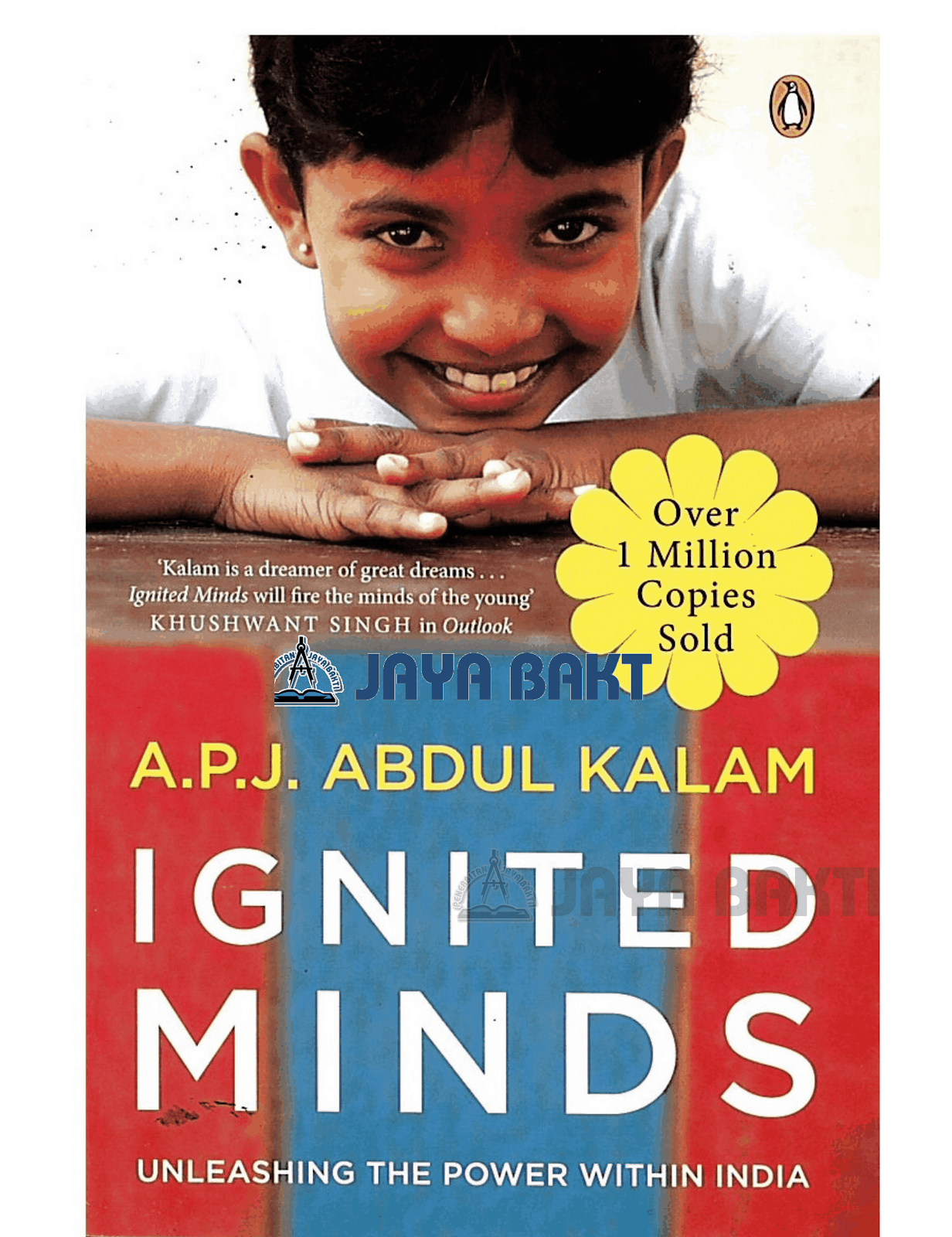
Ignited Minds

In Ignited Minds, Kalam focuses on the power of dreams and the potential of Indian youth. He urges young people to think creatively, overcome challenges, and contribute to the nation’s growth. The book is filled with inspiring stories and practical advice, making it a beacon of hope for students across India.

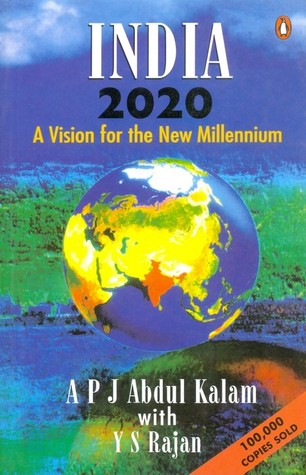
India 2020

India 2020 is Kalam’s visionary blueprint for transforming India into a developed nation by the year 2020. Co-authored with Dr. Y.S. Rajan, this book discusses the role of science, technology, agriculture, and education in driving India’s progress. It is a call to action for policymakers, entrepreneurs, and citizens alike to work together for a better future.

Other Notable Works

Dr. Kalam also wrote The Life Tree, My Journey, and Turning Points, each reflecting his thoughts on leadership, innovation, and the spirit of India.

📖 Why Read These Books?

Dr. Kalam’s writings inspire readers to dream big, believe in themselves, and work tirelessly for their goals. His words continue to ignite the minds of millions worldwide.

👨‍🎓 Dr. A.P.J. Abdul Kalam and His Inspiration to the Youth of India

Dr. A.P.J. Abdul Kalam’s deep connection with young people is one of the most celebrated aspects of his legacy. He believed that the youth of India were the nation’s greatest asset and that empowering them was key to India’s progress.

Throughout his life, Kalam tirelessly engaged with students, educators, and young professionals. He often said:

“Dream, dream, dream. Dreams transform into thoughts and thoughts result in action.”

This quote reflects his core philosophy: that imagination and hard work can change the world. Kalam encouraged students to be curious, innovate fearlessly, and work with passion and integrity. His speeches were filled with practical advice on overcoming obstacles, setting goals, and contributing positively to society.

Kalam’s vision for India was rooted in education and technology. He advocated for improving science education, creating more research opportunities, and fostering an entrepreneurial spirit among youth. His efforts helped ignite a wave of scientific curiosity and patriotism across Indian campuses.

Even after his presidency, Kalam continued to visit schools, colleges, and universities nationwide, inspiring countless young minds to pursue careers in science, technology, and public service.

🌟 Legacy Among Youth

Dr. Kalam is affectionately called the “People’s President” and the “Missile Man”, but to millions of young Indians, he remains the ultimate role model who showed that humble beginnings can lead to extraordinary achievements.

🕯️ The Last Moments of Dr. A.P.J. Abdul Kalam: A Life Dedicated to Teaching

Dr. A.P.J. Abdul Kalam’s dedication to education and inspiring youth remained unwavering until his final moments. On July 27, 2015, while delivering a lecture at the Indian Institute of Management Shillong (IIM Shillong), Kalam suddenly collapsed and passed away peacefully.

Even in his last moments, he was doing what he loved most—sharing knowledge and motivating young minds to dream big and work hard. His death was mourned across India and around the world, as people remembered a leader who truly embodied humility, vision, and service.

Kalam’s passing marked the end of an era, but his legacy continues to inspire millions to pursue education, innovation, and nation-building.

🕯️ Remembering Kalam: His life teaches us that true greatness lies in serving others and inspiring future generations.

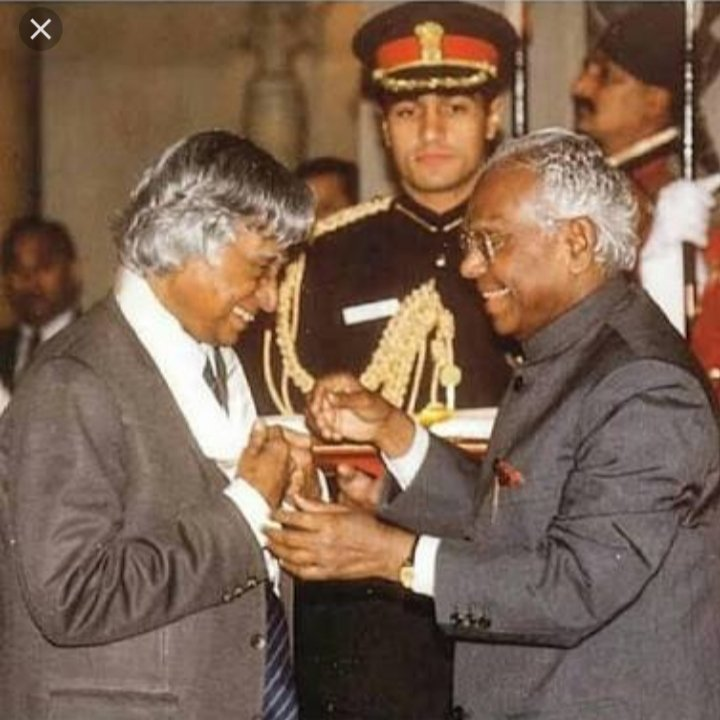
🏆 Awards and Achievements: Honoring the Legacy of Dr. A.P.J. Abdul Kalam

Dr. A.P.J. Abdul Kalam’s extraordinary contributions to science, technology, education, and national service earned him some of the highest honors in India and recognition around the world. His life was a shining example of dedication, innovation, and humility.

🇮🇳 Major Civilian Awards

  • Bharat Ratna (1997): India’s highest civilian award, given for his outstanding contributions to science and for his leadership in strengthening national defense through technological advancement.

  • Padma Vibhushan (1990): India’s second-highest civilian honor, awarded for his service in the field of science and engineering.

  • Padma Bhushan (1981): The third-highest civilian award, recognizing his distinguished service to the nation.

🧪 Scientific and Academic Recognition

  • Honored by the Indian Space Research Organisation (ISRO) and Defence Research and Development Organisation (DRDO) for his work on India’s missile and satellite programs.

  • Played a critical role in India’s nuclear tests at Pokhran in 1998, boosting the country's strategic defense capabilities.

🎓 International Honors and Degrees

  • Received honorary doctorates from over 40 universities worldwide, recognizing his contributions to science, technology, and education.

  • Named as an honorary professor and fellow by many prestigious academic and space institutions globally.

🏫 Posthumous Recognition

  • Numerous schools, universities, research centers, scholarships, and awards have been named after Dr. Kalam to honor his lasting impact.

  • His birthday, October 15, is celebrated as World Students’ Day in recognition of his love for teaching and his bond with the youth.

🏅 A True Hero of the Nation

Dr. Kalam’s achievements are not just milestones but symbols of what dedication, knowledge, and a service-driven mindset can accomplish.

💡 Conclusion: The Enduring Legacy of Dr. A.P.J. Abdul Kalam

Dr. A.P.J. Abdul Kalam’s life story is a powerful reminder that true success is not determined by wealth or privilege but by courage, determination, and a passion to serve others. From his humble beginnings in Rameswaram to becoming India’s Missile Man and beloved People’s President, Kalam’s journey inspires millions worldwide.

His unwavering commitment to education, innovation, and youth empowerment helped shape modern India’s scientific landscape. Kalam’s vision of an “India 2020” continues to inspire policymakers, scientists, and citizens to work toward a developed and prosperous nation.

Most importantly, Dr. Kalam taught us the value of dreaming big and turning those dreams into reality through hard work and integrity. His words still echo in classrooms and boardrooms, motivating people to pursue excellence and contribute meaningfully to society.

If Dr. Kalam’s story has inspired you, please share your thoughts in the comments below. Don’t forget to follow this blog for more inspiring stories about remarkable individuals who have shaped our world.

🔔 Stay connected! Share this post with friends and family to spread the inspiration and keep Dr. Kalam’s legacy alive.


Thank you for reading. 👀

Professor (Dr.) P. M. Malek 
malekparveen_786@yahoo.com

Remembering Dharmendra: Bollywood's Legendary 'He-Man' — A Life That Defined An Era

Remembering Dharmendra: Bollywood's Legendary 'He-Man' — A Life That Defined An Era A Legend Passes Into Cinema History The Indi...